Address
Malek Manson Market
Shop No. 03, Lane No. 01
East Aganagar, South Keraniganj
Dhaka-1310, Bangladesh
Work Hours
Monday to Thursday: 7AM - 7PM
Weekend: 10AM - 5PM
Address
Malek Manson Market
Shop No. 03, Lane No. 01
East Aganagar, South Keraniganj
Dhaka-1310, Bangladesh
Work Hours
Monday to Thursday: 7AM - 7PM
Weekend: 10AM - 5PM


Explore the common types of denim fabric, including raw, washed, stretch, non-stretch, lightweight, medium-weight and heavyweight denim, and learn how to select the right fabric for different garment requirements.
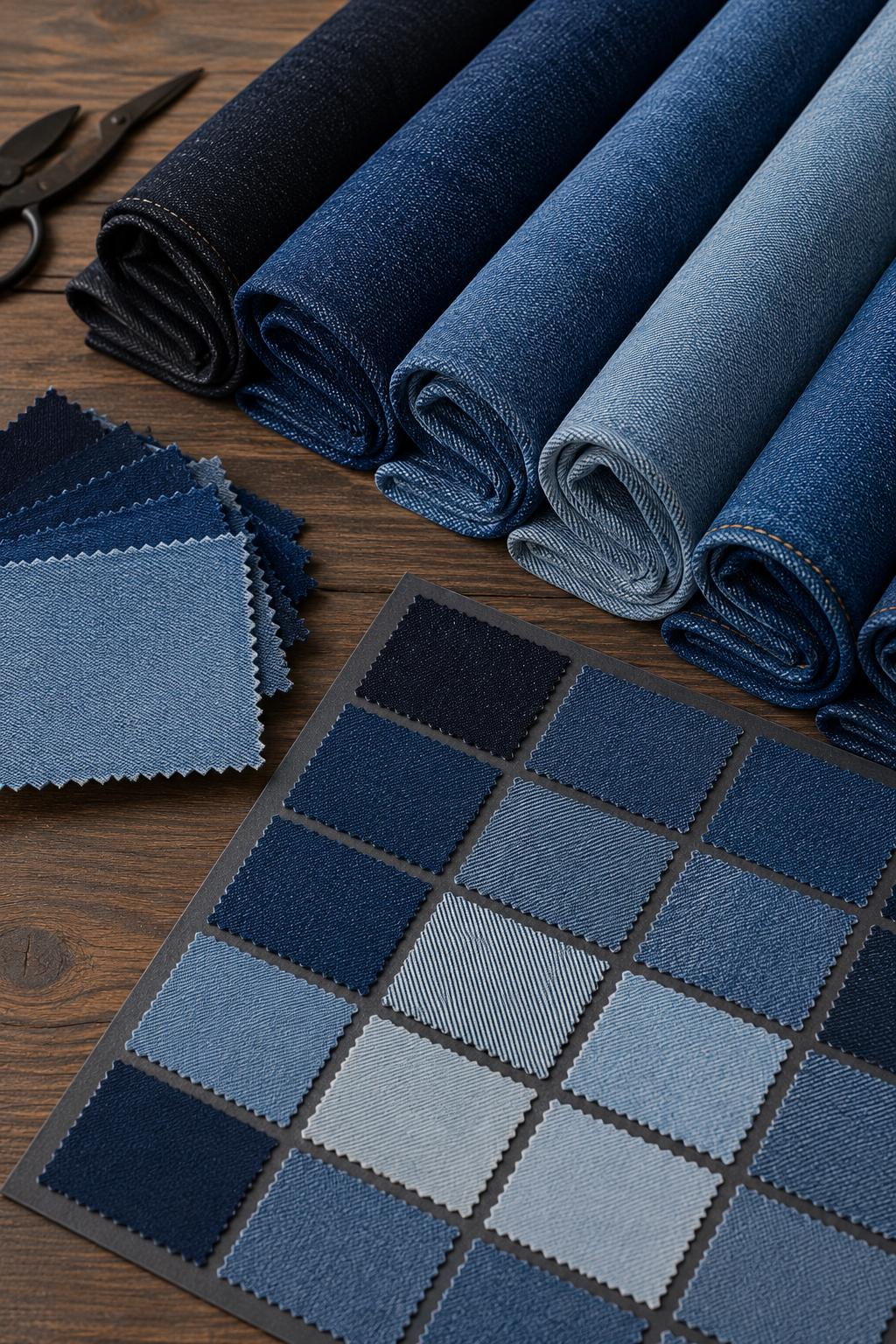
Denim is one of the most widely used fabrics in the apparel industry, particularly for jeans, trousers, jackets and casualwear. However, denim is not a single type of fabric. It is available in different weights, constructions, finishes, compositions and levels of stretch, each suited to different garment requirements.
For garment manufacturers, tailors, clothing businesses and fabric buyers, understanding these differences is important when selecting the right denim for a particular product.
In this article, we explore the common types of denim fabric and the factors that should be considered when choosing denim for garment production.
Denim is a woven fabric traditionally produced using a twill construction, where the yarns create the characteristic diagonal pattern visible on the fabric surface.
Traditional denim is commonly made from cotton and is known for its:
The appearance and performance of denim can vary significantly depending on the yarn, fabric weight, weave, composition and finishing process.
Raw denim, sometimes called unwashed denim, is fabric that has not undergone extensive washing or finishing after production.
It generally has a firm feel and a deep, uniform appearance. Because it has not been heavily washed, raw denim can develop changes in appearance and character through use.
Raw denim is often selected when the manufacturer or clothing brand wants a more authentic and structured denim appearance.
Washed denim has undergone washing or finishing processes designed to change its appearance, softness and overall feel.
Depending on the process used, washed denim can have a lighter colour, softer hand feel and a more casual appearance.
Washed denim is particularly popular for products where a softer and more comfortable appearance is desired.
Stretch denim contains an elastic fibre, such as elastane, together with the main textile fibres.
The addition of stretch allows the fabric to move more easily with the wearer while maintaining the familiar appearance of denim.
The amount of stretch should be selected according to the intended garment design and required level of comfort.
Non-stretch denim does not contain an elastic fibre and generally provides a more traditional denim feel.
It can offer a firm structure and is suitable for garments where shape retention and a classic denim character are important.
For buyers looking for conventional denim, non-stretch fabric remains an important option.
Lightweight denim has a lower fabric weight and is generally more comfortable for garments intended for warmer conditions or lighter construction.
It can provide the appearance of denim without the heavier feel associated with traditional heavy denim.
Lightweight denim can be particularly useful when comfort and ease of movement are priorities.
Medium-weight denim provides a balance between durability, structure and comfort.
It is one of the most versatile options for general garment production and can be used for a wide range of denim products.
For businesses purchasing denim for multiple applications, medium-weight fabrics can offer considerable versatility.
Heavyweight denim is produced with a higher fabric weight and generally provides greater structure and a more substantial feel.
It is often selected when durability and a strong garment structure are important considerations.
The appropriate weight should always be selected according to the intended garment and manufacturing requirements.
One of the most important factors when purchasing denim is fabric weight.
A heavier fabric does not automatically mean it is better. The right weight depends on the intended application.
For example:
Lighter denim may be appropriate for comfortable summer clothing, while medium-weight denim can be suitable for general jeans and trousers. Heavyweight denim may be preferred for workwear or garments requiring additional structure.
Therefore, fabric buyers should consider the final garment before selecting the fabric weight.
Fabric type alone is not enough to determine whether a particular denim is suitable for a garment.
Buyers should also consider the following factors.
The fibre composition affects comfort, durability, flexibility and overall fabric performance.
Weight influences the thickness, structure and feel of the finished garment.
Stretch denim can provide additional flexibility and comfort, while non-stretch denim provides a more traditional construction.
Denim is available in a wide range of shades, from deep indigo and dark blue to medium and lighter washes.
Different finishing and washing processes can significantly change the appearance and feel of denim.
A fabric suitable for jeans may not necessarily be the best choice for a lightweight shirt or a structured jacket.
Garment manufacturers should also consider cutting, sewing, washing and finishing requirements before purchasing fabric in bulk.
For wholesalers, garment manufacturers, tailoring businesses and clothing companies, purchasing denim requires more than simply selecting a colour.
It is important to consider:
When buying in wholesale quantities, buyers should communicate their specifications clearly to the supplier before confirming an order.
There is no single denim fabric that is ideal for every garment.
A clothing manufacturer producing traditional jeans may require a different fabric from a business producing stretch trousers. Similarly, a workwear manufacturer may prioritize durability and fabric weight, while a fashion clothing business may place greater emphasis on colour, finish and comfort.
The best approach is to begin with the requirements of the final garment and then select the denim characteristics accordingly.
At Watson Traders, we specialize in wholesale fabric supply for businesses involved in tailoring, garment production and clothing-related activities.
Our product range includes denim fabrics, twill fabrics, jeans fabrics and trouser/pants fabrics for different wholesale requirements.
We work with businesses that require fabric for their regular production and trading needs and aim to provide suitable fabric options according to their requirements.
If you are looking for denim or other fabrics for wholesale purposes, you can contact Watson Traders to discuss your requirements, product availability and sourcing needs.
Contact Watson Traders to discuss your fabric requirements.
Website: www.watson-traders.com
