Address
Malek Manson Market
Shop No. 03, Lane No. 01
East Aganagar, South Keraniganj
Dhaka-1310, Bangladesh
Work Hours
Monday to Thursday: 7AM - 7PM
Weekend: 10AM - 5PM
Address
Malek Manson Market
Shop No. 03, Lane No. 01
East Aganagar, South Keraniganj
Dhaka-1310, Bangladesh
Work Hours
Monday to Thursday: 7AM - 7PM
Weekend: 10AM - 5PM


Explore current fabric trends and important considerations for wholesale fabric sourcing in the garment industry, including denim, twill, quality, pricing, availability, inventory management, and reliable supplier relationships.
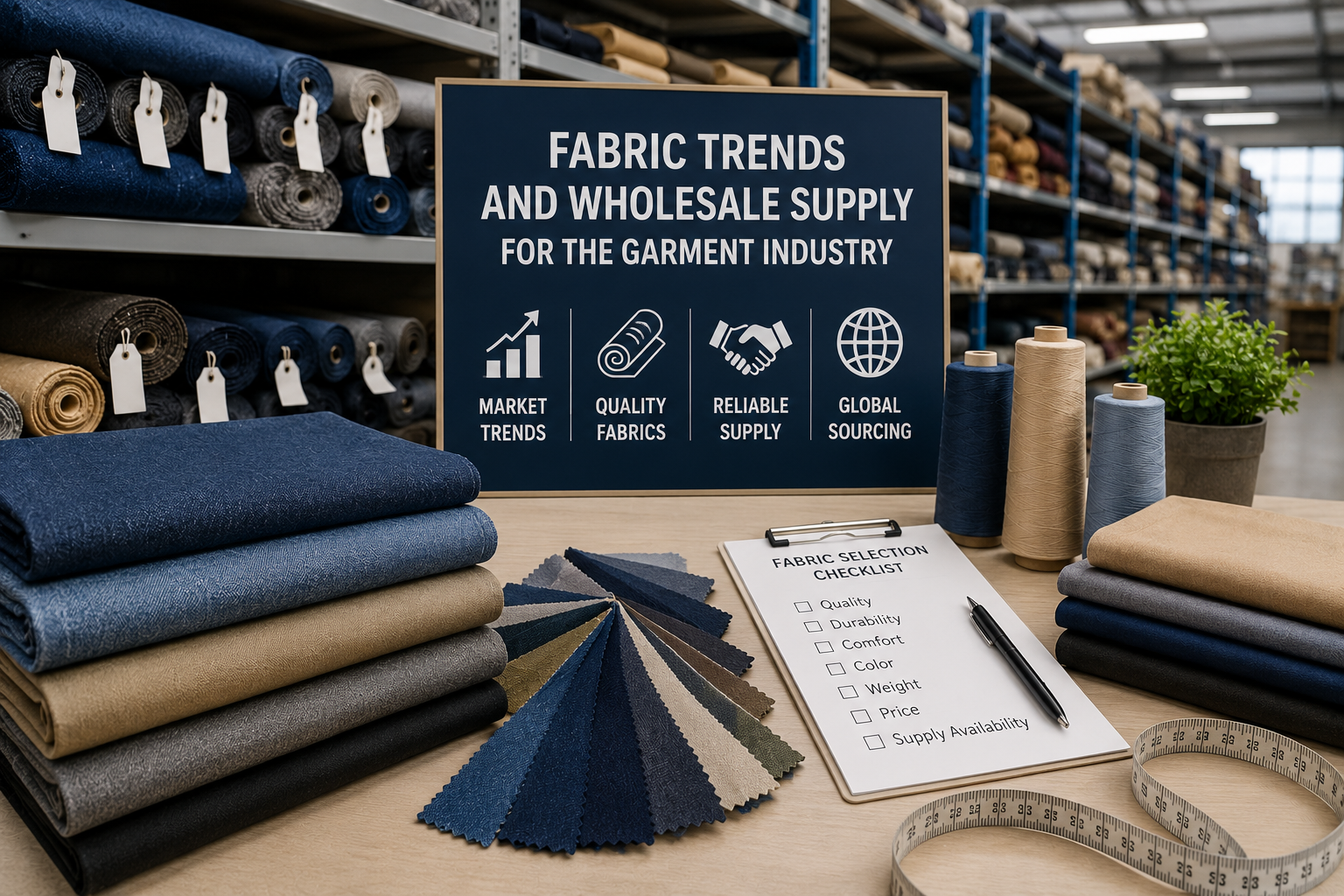
The garment industry is constantly evolving. Customer preferences change, fashion trends develop, and clothing manufacturers continuously look for fabrics that offer the right combination of quality, appearance, comfort, durability, and cost.
For garment manufacturers, tailors, clothing retailers, and fabric wholesalers, understanding changing fabric trends and maintaining a dependable wholesale supply can play an important role in successful production.
Fabric trends are influenced by several factors, including fashion, consumer preferences, climate, garment design, production requirements, and market demand.
While trends can change from season to season, some fabric categories continue to have strong practical applications across the garment industry.
Denim remains one of the most widely recognized fabrics in the clothing industry, particularly for jeans and casual garments.
Different denim weights, constructions, colours, and finishes allow manufacturers to create a wide variety of products.
Depending on the garment design, manufacturers may look for denim with characteristics such as:
The right denim specification depends on the intended garment and target market.
Twill is another important fabric category for trousers, pants, uniforms, workwear, and casual garments.
Its woven construction can provide a combination of durability and an attractive appearance, making it useful for different types of clothing production.
Twill fabrics can also be available in different weights, compositions, colours, and finishes to meet different production requirements.
Manufacturers producing jeans and trousers may require different fabric specifications depending on their product range.
A supplier may therefore need to provide materials suitable for:
Selecting the right fabric for each product helps manufacturers maintain consistency in their finished garments.
Several factors can influence wholesale fabric demand.
Consumers increasingly look for clothing that combines appearance with comfort and durability.
This can influence manufacturers to explore different fabric compositions, weights, colours, and finishes.
A fabric that works well for one garment may not be suitable for another.
Designers and manufacturers therefore need to consider the structure, weight, flexibility, and appearance of the fabric before placing an order.
Fabric requirements can change depending on the season and target market.
Lighter materials may be more suitable for warmer conditions, while heavier fabrics may be preferred for cooler environments or garments requiring additional structure.
Large-scale garment production requires reliable access to consistent materials.
When manufacturers plan production schedules, they need to consider not only fabric quality but also availability, quantity, delivery time, and consistency between orders.
For a garment business, finding the right fabric is only one part of the process.
The supplier’s ability to provide consistent quality and reliable availability can be equally important.
A manufacturer may have a specific fabric specification that needs to be reproduced across multiple production orders. Inconsistent materials can create differences in colour, weight, texture, or performance.
This is why establishing relationships with dependable wholesale suppliers can be valuable for businesses involved in regular garment production.
Before placing a wholesale fabric order, businesses should consider several factors.
Clearly identify the required:
Clear specifications help reduce misunderstandings between buyers and suppliers.
Wholesale purchases can vary considerably depending on the size of the business and production requirements.
Before ordering, buyers should determine their expected consumption and whether they require a one-time purchase or regular supply.
Consistency is particularly important for businesses producing garments in large quantities.
Buyers should consider whether the supplier can maintain reasonably consistent specifications across different orders and batches.
Price is an important consideration, but it should not be the only factor.
A very low-cost fabric may not always provide the performance or quality required for a particular garment.
Businesses should consider the relationship between price, quality, durability, and intended use.
A fabric that is suitable but difficult to source regularly may create production challenges.
For businesses with ongoing requirements, supplier availability can therefore be an important part of the purchasing decision.
Garment businesses often benefit from maintaining relationships with multiple reliable suppliers.
A strong supply network can help businesses respond to changes in demand and production requirements.
When evaluating suppliers, businesses may consider:
The objective should be to develop a supply relationship that works for both the buyer and supplier.
Wholesale fabrics may be sourced from different markets depending on product requirements, pricing, availability, and quality.
Businesses may purchase fabrics from local suppliers as well as international markets, including countries such as China and India.
International sourcing can provide access to a wider variety of materials, while local sourcing may offer practical advantages for certain purchasing requirements.
The best sourcing strategy depends on the individual business and its customers.
Maintaining appropriate inventory is important for businesses involved in wholesale fabric supply and garment production.
Too little stock can create supply problems when customer demand increases. At the same time, excessive inventory can tie up business capital and storage capacity.
A practical stock-management approach considers:
Customer demand → Current inventory → Expected production → Supplier availability → Purchasing requirements
Regular monitoring can help businesses make more informed purchasing decisions.
When selecting a wholesale fabric supplier, businesses should look beyond individual transactions.
A reliable supplier should be able to communicate clearly about available fabrics, specifications, quantities, and purchasing requirements.
For regular buyers, a long-term supplier relationship can make it easier to plan future purchases and respond to changing customer requirements.
Businesses should also verify fabric specifications and inspect samples where appropriate before committing to larger quantities.
The garment industry will continue to evolve as fashion, customer preferences, manufacturing practices, and market requirements change.
For fabric suppliers and garment businesses, adaptability will remain important.
Businesses that understand their customers, monitor demand, maintain appropriate inventory, and develop dependable supplier relationships can be better prepared to respond to changing market requirements.
At the same time, fabric selection should remain focused on practical requirements rather than trends alone. The most suitable fabric is ultimately the one that meets the garment’s purpose, quality expectations, production requirements, and target market.
Watson Traders is a wholesale fabric business serving businesses that require fabrics for trousers, pants, jeans, and related garment production.
The business supplies denim fabrics, twill fabrics, jeans fabrics, and trouser/pants fabrics and sources fabrics through both local suppliers and international markets.
With a focus on wholesale supply, Watson Traders works with customers including tailors, garment factories, clothing manufacturers, retail fabric shops, and other wholesalers.
For businesses looking for wholesale fabric according to their specific requirements, Watson Traders can discuss available fabric categories, quantities, and purchasing needs.
Contact Watson Traders to discuss your wholesale fabric requirements.
