Address
Malek Manson Market
Shop No. 03, Lane No. 01
East Aganagar, South Keraniganj
Dhaka-1310, Bangladesh
Work Hours
Monday to Thursday: 7AM - 7PM
Weekend: 10AM - 5PM
Address
Malek Manson Market
Shop No. 03, Lane No. 01
East Aganagar, South Keraniganj
Dhaka-1310, Bangladesh
Work Hours
Monday to Thursday: 7AM - 7PM
Weekend: 10AM - 5PM


Choosing the right fabric is essential for producing comfortable, durable, and well-finished trousers and pants. Learn how fabric type, weight, comfort, durability, climate, colour, and intended use can influence the best fabric choice for different garments.
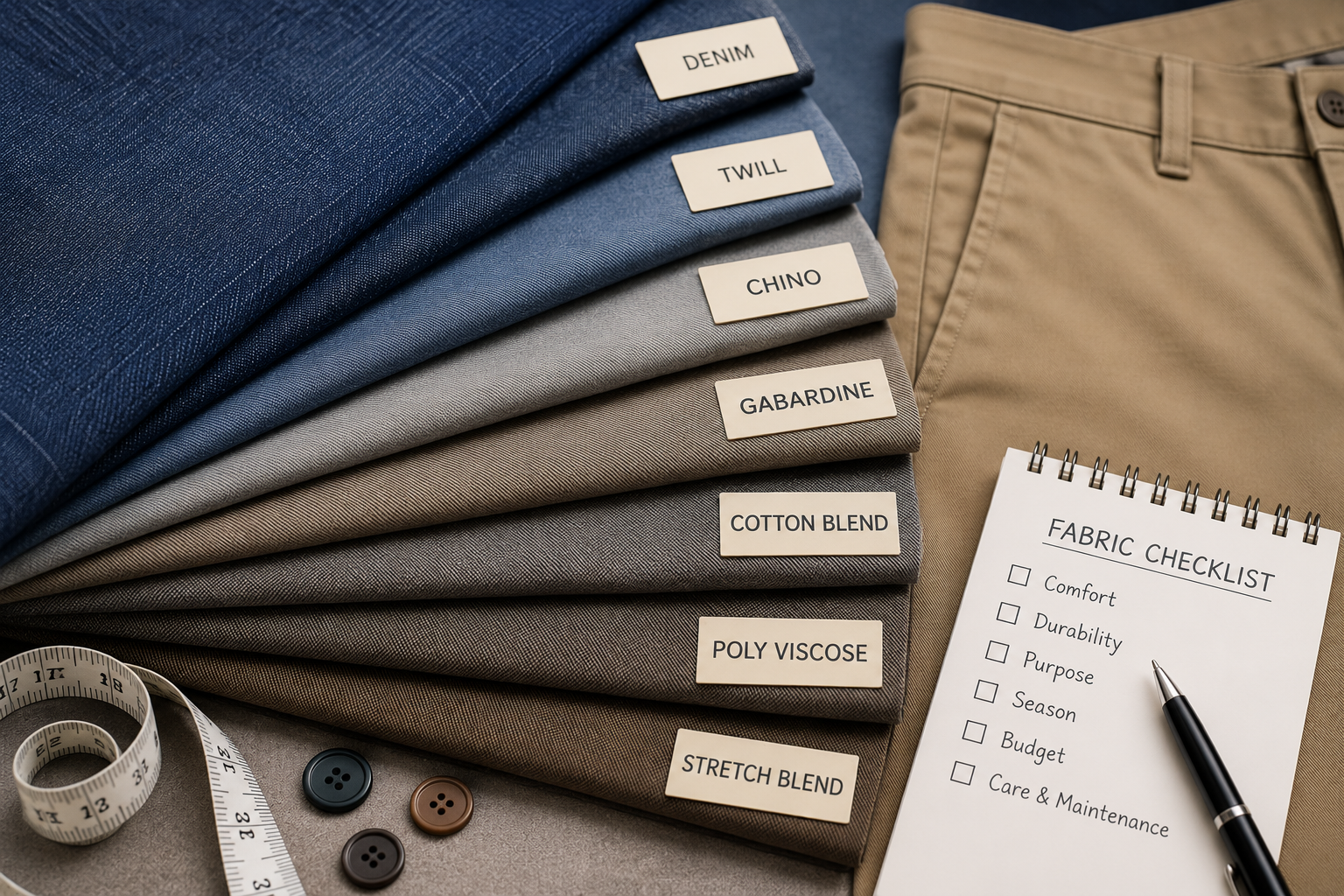
Choosing the right fabric is one of the most important decisions when producing trousers or pants. The fabric affects not only the appearance of the finished garment, but also its comfort, durability, fit, movement, and suitability for different occasions.
For tailors, garment manufacturers, clothing retailers, and wholesalers, understanding the characteristics of different fabrics can make it easier to select the right material for each type of trouser.
The first question should always be: Where and how will the trousers be used?
Different applications require different fabric characteristics.
Selecting fabric according to the final use helps ensure that the finished garment performs as expected.
Fabric weight is another important factor.
A heavier fabric generally provides greater structure and durability, while a lighter fabric can feel more comfortable in warm weather and may provide better breathability.
For example, heavier denim can be suitable for durable jeans, while lighter-weight fabrics may be more appropriate for casual trousers intended for warmer climates.
The ideal weight depends on the garment design, season, target customer, and intended use.
Denim is widely used for jeans and casual trousers. It is known for its durability and distinctive appearance.
Different denim constructions and weights can produce very different results. Stretch denim can also provide additional flexibility and comfort.
Twill fabrics are popular for trousers because of their strong construction and versatile appearance. They can be used for casual pants, workwear, uniforms, and other garments.
Cotton blends can combine the comfort of cotton with other useful properties such as improved durability, easier maintenance, or better shape retention.
Poly-viscose fabrics are commonly considered for formal and office trousers because they can provide a relatively smooth appearance and practical everyday performance.
A good-looking trouser fabric should also be comfortable.
For garments designed for regular movement, consider:
For example, trousers containing a suitable percentage of stretch fibre can provide additional freedom of movement compared with a completely rigid fabric.
However, the amount of stretch should match the design and intended use of the garment.
For workwear, uniforms, everyday trousers, and frequently used garments, durability is particularly important.
Before selecting a fabric, businesses should consider:
A fabric that is attractive but unsuitable for the intended level of use may result in customer dissatisfaction.
Colour and finish play a major role in the appearance of trousers.
For formal and professional garments, colours such as black, navy, charcoal, grey, and darker shades are commonly suitable.
For casual clothing, businesses may have a much wider choice, including different shades of blue, beige, brown, olive, and other colours.
For denim, washing and finishing techniques can also significantly change the appearance of the final garment.
Climate should also influence fabric selection.
For warm and humid environments, lighter fabrics and breathable constructions can provide greater comfort.
For cooler conditions, heavier fabrics can provide additional structure and warmth.
Businesses supplying trousers to different markets should therefore consider the climate and seasonal requirements of their customers.
The right fabric for one customer may not be the right fabric for another.
A garment manufacturer producing premium formal trousers may have different requirements from a tailor producing affordable everyday pants.
Before purchasing fabric in wholesale quantities, consider:
Target customer → Garment type → Intended use → Fabric characteristics → Required quantity → Budget
This approach can help businesses avoid purchasing unsuitable materials.
Before placing a large wholesale order, it is good practice to inspect the fabric carefully.
Important points to check include:
Where appropriate, requesting samples before a larger purchase can help businesses evaluate whether the fabric meets their requirements.
The quality of the finished garment depends heavily on the quality and consistency of the fabric.
A reliable wholesale supplier should be able to communicate clearly about fabric specifications, availability, quantities, and purchasing requirements.
For businesses purchasing regularly, consistent supply can be just as important as the initial fabric price.
Before purchasing fabric for trousers or pants, ask:
Choosing fabric for trousers and pants is not simply about selecting an attractive material. The best choice depends on the purpose, comfort, durability, climate, design, customer expectations, and budget.
For tailors, garment manufacturers, clothing businesses, and retailers, understanding these factors can make fabric purchasing more efficient and help produce garments that meet the needs of their customers.
At Watson Traders, we focus on wholesale fabric supply for businesses looking for materials suitable for denim, jeans, trousers, and pants production. Our product range includes denim fabrics, twill fabrics, jeans fabrics, and trouser/pants fabrics for business requirements.
Looking for wholesale fabric for your next production order? Contact Watson Traders to discuss your requirements.
